
Agent First public-data Skills: from tasks to MCP

Updated
A hub guide to UnifAPI's Skills-first model: task workflows for agents, MCP as the connection path, and public-data APIs as the evidence layer.
In short: This is the hub argument for UnifAPI's Skills-first blog cluster: start from an agent task, connect MCP when evidence is needed, and keep APIs as the public-data layer.
The first version of UnifAPI looked like a developer product: catalog, endpoints, API keys, docs. That surface is still necessary for builders, but it is not how most agent operators describe their work. They do not wake up wanting a Twitter endpoint. They want a KOL pricing brief, a creator shortlist, a competitor launch summary, a Reddit research pass, or a social-listening report with evidence they can trust.
That is why UnifAPI's marketing surface moved to Agent First Skills. A Skill is a task-specific workflow an agent can run through UnifAPI MCP. The API catalog remains the public-data layer under the workflow; it just stops being the first thing we ask a marketer or researcher to understand.
The short version
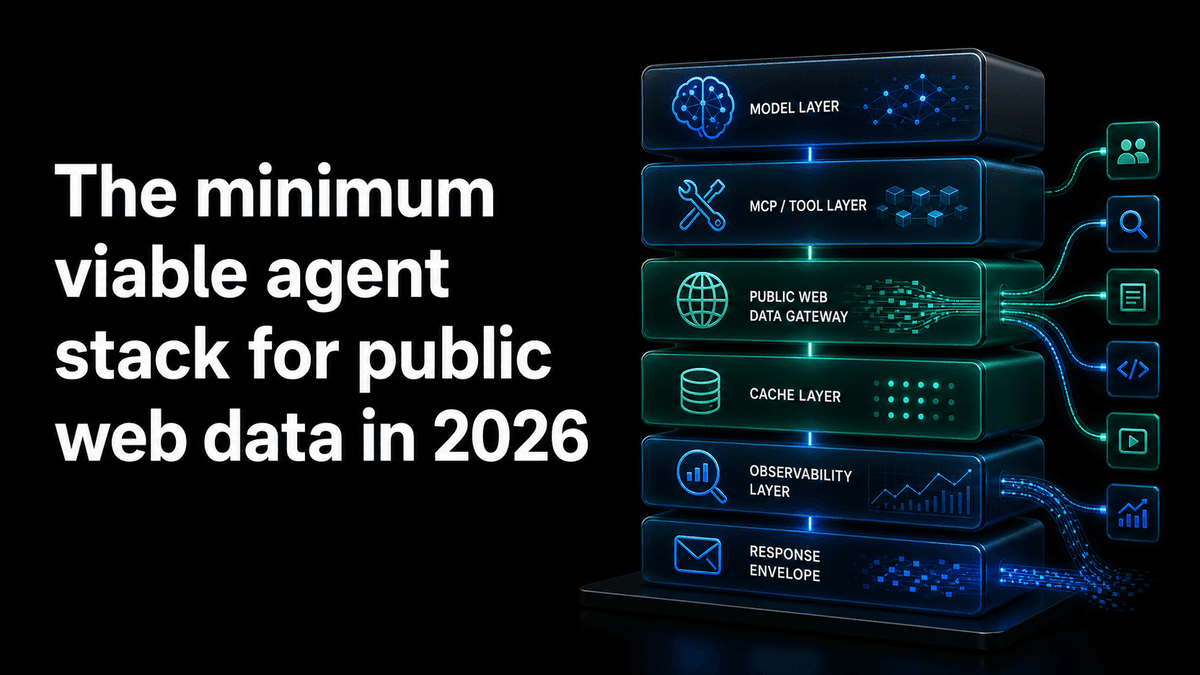
| Layer | What the user sees | What the agent uses | What UnifAPI provides |
|---|---|---|---|
| Skill | A task such as KOL pricing, creator discovery, or market research | A prompt, expected output shape, and follow-up workflow | The task page, run prompt, data boundaries, and examples |
| MCP | A connector URL and OAuth flow | Tools for discovery, inspection, and calls | list_operations, get_operation, and call_api over the live catalog |
| API | HTTP endpoints and OpenAPI | Stable request/response contracts | Platform-native public records, pagination, errors, and billing metadata |
The point is not to hide the API. It is to put the API at the right level of abstraction. A developer can still call /apis/twitter or read /openapi.json. An operator should be able to start at /skills/kol-pricing, paste a prompt into Codex or Claude Code, connect https://mcp.unifapi.com, and let the agent fetch evidence when needed.
What makes something a Skill
A Skill starts with an outcome, not a source. Good Skill names sound like work a person would assign: price a KOL campaign, build a creator shortlist, monitor a market, explain a competitor, map a Reddit community. Bad Skill names sound like implementation details: call Twitter search, fetch Reddit comments, list TikTok videos.
The page should then answer six practical questions. What result will I get? What inputs do I need to provide? What public data can the agent use? What will the output look like? What does this workflow not know? What should I ask next if the first answer is useful?
That last question matters. A Skill is not a mini SaaS app and it is not a static template. It is a conversational workflow. The agent can ask for missing campaign context, run an additional platform search, explain confidence, compare two creators, or narrow the result to a different market without needing a new GUI.
A concrete example: KOL pricing
KOL pricing is the canonical first benchmark because it is messy in a way that agent workflows handle well. Public data can show creator identity, recent posting cadence, engagement, topic fit, audience signals, and risk notes. It cannot know the creator's actual quote, package terms, usage rights, exclusivity, or relationship history.
A useful Skill keeps both sides visible. It asks the agent to return a rate range, confidence level, evidence, assumptions, and follow-up questions rather than pretending to know a single exact sponsorship price. That is a better fit for the real buyer's job: prepare for negotiation, shortlist the right creators, and decide where deeper outreach is worth the time.
Why MCP changes onboarding
Before MCP, an operator often had to choose a data vendor, create an API key, hand that key to an app, wire a separate LLM provider, then hope the GUI matched the workflow they had in mind. MCP changes the order. The user can start from the task in the agent product they already use. OAuth opens when the agent needs to call UnifAPI tools or spend workspace credits.
The hosted UnifAPI MCP server exposes the catalog through three tools rather than one tool per endpoint. The agent uses list_operations to discover what exists, get_operation to inspect schemas and examples, and call_api to invoke a concrete public-data operation. That keeps the MCP surface compact even as the HTTP API catalog grows.
This also keeps model execution and data access separate. The user's agent plan handles model reasoning. UnifAPI provides the live public-data records and bills them at the record layer. That split makes a Skill easier to try before it becomes product code.
Why APIs still matter
Skills need trustworthy data. The live API catalog is still visible, searchable, and documented because developers will still turn working workflows into production systems. What changes is the order: Skills first, APIs second. The catalog only shows shipped APIs so an agent does not try to call roadmap entries.
The API layer also protects the Skill from vague prompt engineering. Public-data operations have named paths, parameter schemas, pagination behavior, response envelopes, and billing metadata. If the agent makes a bad call, the trace should show whether the issue was the prompt, the operation choice, the provider response, or the reshape layer.
What belongs on a Skill page
A strong Skill page should include a plain-language job description, a copyable run prompt, required inputs, optional inputs, the public-data APIs involved, an expected output template, cost expectations, confidence rules, risk boundaries, and related Skills. The page should also expose a markdown alternate so another agent can read the workflow without depending on visual layout.
| Section | Why it helps a human | Why it helps an agent |
|---|---|---|
| Run prompt | Lets the user start immediately | Provides task, constraints, and output shape |
| Data sources | Shows what evidence is available | Narrows operation discovery |
| Output template | Sets expectations | Reduces vague synthesis |
| Boundaries | Prevents overclaiming | Forces uncertainty and follow-up questions |
| Related Skills | Gives the next workflow | Builds internal context and retrieval paths |
Search and AI discovery shape
For search, Skills match the language users already use: KOL pricing agent, creator research agent, public-data Skills for agents, MCP Skills for marketing research, competitive intelligence agent. For AI search and agent retrieval, the same facts need to be available in HTML, markdown, structured data, llms.txt, and internal links.
The point is not to trick search engines or AI answers. It is to make the page match the real job the user is trying to do, then expose the same reliable facts in several crawlable formats. That also keeps the site honest: if the Skill page says the workflow can do something, the MCP catalog and API contract should support it.
Source note
This article was refreshed on June 2, 2026 against the current UnifAPI product context, live Skills/API surfaces, and the official Model Context Protocol introduction. It intentionally treats Skills as workflow guidance and MCP as the connection path rather than claiming that every API endpoint is a separate MCP tool.
What to read next
Run a KOL pricing agent with MCP - turns the Skills positioning into a concrete workflow.
Minimum viable agent stack - shows the stack behind a repeatable public-data Skill.
Browse UnifAPI Skills - moves from strategy to live task pages.